Automatic cat litter box: how to choose one and get your cat to use it
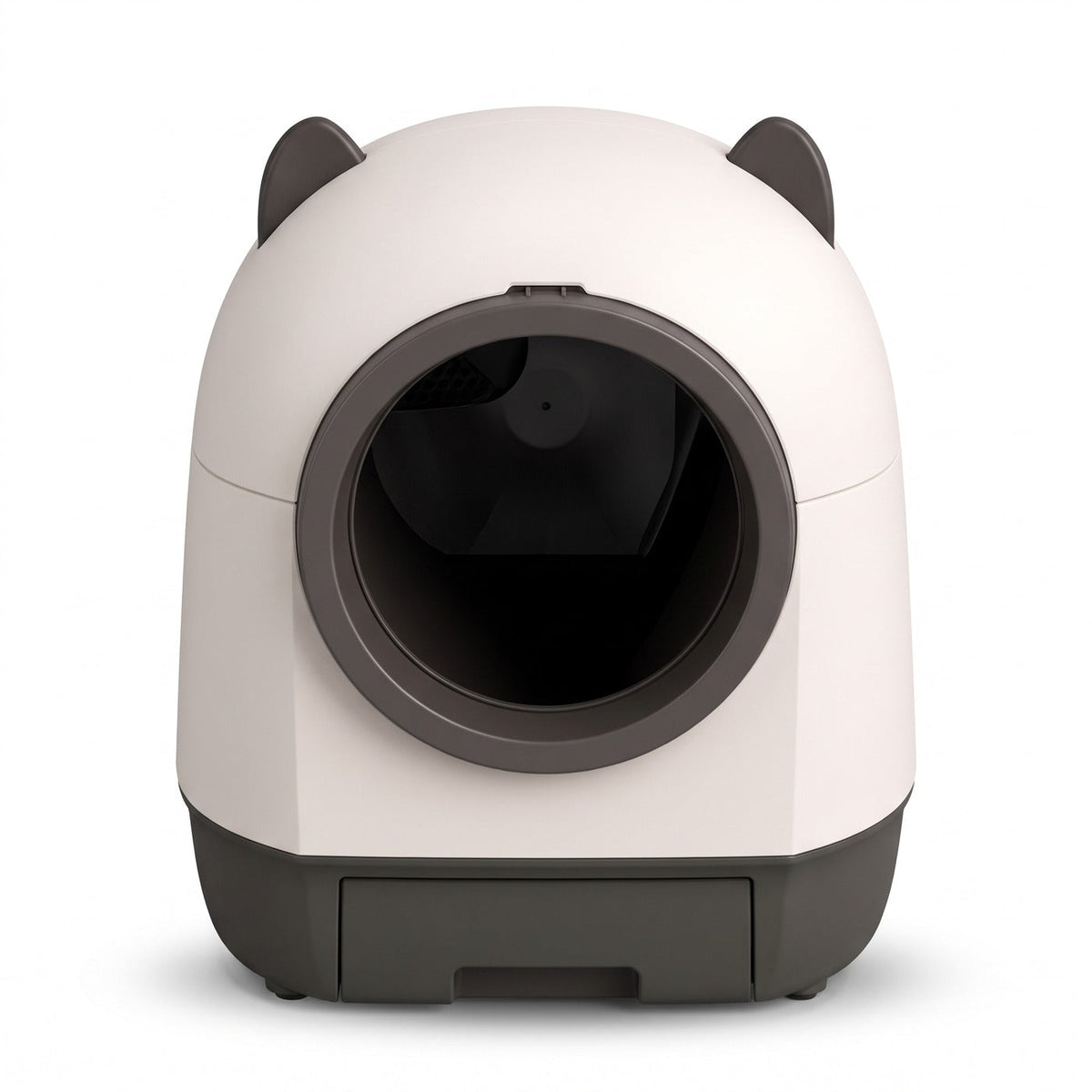
Scooping the litter box every day is the chore nobody enjoys. An automatic litter box promises to take it off your hands: your cat does its business, the machine sorts everything on its own, and you empty a sealed waste drawer every few days. On paper, it's perfect. In practice, two questions always come up before buying: which one should I choose? and above all will my cat actually use it? Here are the answers.
How does an automatic litter box work?
Most recent models are built around a rotating drum. Your cat walks in, does its business and leaves. Sensors detect that it has gone, then the unit waits a few minutes for the litter to clump. The drum then turns slowly: clean litter passes through a sieve and stays in place, while the clumps slide into a sealed waste drawer underneath. All you have to do is change the bag from time to time.
The result: your cat finds clean litter every single time. That matters, because a dirty litter box is one of the main reasons a cat starts going elsewhere.
The 6 criteria that really matter
1. Drum and waste drawer capacity
The drum volume tells you how much room your cat has inside; the waste drawer volume, how often you'll need to empty it. For one cat, a 65-litre drum is comfortable. From two or three cats, go bigger: 80 litres and a drawer of around ten litres let you empty it less often.
2. Entrance and ease of access
A cat that has to squeeze to get in somewhere will always find an alternative. A wide entrance at paw level, with no step to climb, makes adoption much easier, especially for older or slightly heavier cats.
3. Noise
This is what scares cats most. A quiet motor, around 40 decibels (quieter than a conversation), lets you place the unit in a living area without the cycle sending your cat running… or waking you up at night.
4. Safety features
This one is non-negotiable. The drum must never turn while a cat is inside or stepping in. The best models combine several systems: weight sensors in the feet, infrared sensors, anti-pinch protection. Also check the minimum weight detected: below it, a kitten would not be “seen” by the unit.
5. Compatible litter
An automatic litter box works with clumping litter: that's what forms the clumps the sieve separates. Fine-grain tofu litter, bentonite, mineral or mixed litters generally work well. Avoid large pellets (over 10 mm) and non-clumping litters, which don't sift properly.
6. App and Wi-Fi
The app lets you start a cleaning cycle remotely, set the delay before each cycle and, on some models, track your cat's visits. One practical point to check: most of these units only connect to 2.4 GHz Wi-Fi, not 5 GHz.
Which model for which home?
- One cat, in a flat: our 65 L automatic litter box with 4 weight sensors combines a 28 cm entrance at paw level, 40 dB operation and an instant stop of the rotation as soon as your cat steps on. It runs in automatic mode as soon as it's plugged in, with or without the app.
- You want to keep an eye on their health: the 65 L smart automatic litter box records the time and length of each visit and your cat's weight. A cat that suddenly goes much more often than before is worth mentioning to your vet.
- Several cats: the 80 L automatic litter box with quadruple safety takes cats from 1.5 to 10 kg, with an 11 L waste drawer that slides out from the front on rails. It's the largest capacity in our range.
Getting your cat to use it: the 5-step method
- Put it next to the old litter box, without removing the old one. Your cat should have a choice, not feel trapped.
- Leave it switched off (or in manual mode) for the first few days. To your cat, it's just another litter box at first. It explores at its own pace, with no noise or movement.
- Add a handful of its usual litter to the drum: the familiar smell reassures it and invites it in.
- Turn on automatic cleaning once your cat uses it regularly, with a fairly long delay at first (6 to 10 minutes) so it never sees the drum turning.
- Remove the old litter box only once the new one has clearly become its own. This usually takes one to two weeks.
Be patient: some cats adopt it on the first evening, others need a few days. Never force your cat inside and don't scold it if it goes back to the old box.
Accessories that make upkeep even easier
- An automatic litter box deodoriser, a long-lasting tablet that neutralises odours in the waste drawer.
- A double-layer litter mat in front of the entrance, to catch the grains stuck between paw pads.
What if your cat doesn't like gadgets?
Some cats remain wary of anything that moves or makes noise. For them, an enclosed litter house with a drawer is a good compromise: odours stay inside, and so does scattered litter, and cleaning is as simple as pulling out a drawer.
Frequently asked questions
Is an automatic litter box suitable for a kitten?
Wait until your kitten reaches the minimum weight the sensors can detect (often 1 to 1.5 kg); some manufacturers also recommend a minimum age of 6 months. Until then, keep automatic cleaning switched off.
How often do you need to empty the waste drawer?
With one cat, you'll usually change the bag every three to seven days depending on the model and litter used. With several cats, more often: that's where a large drawer makes all the difference.
Do you use more litter?
Rather less: only the clumps go into the drawer, while clean litter stays in the drum. Just top up the level from time to time.
How do you clean it?
Depending on the model, the drum and drawer can be rinsed with water. The base, which houses the electronics, should only be wiped with a damp cloth.
An automatic litter box isn't chosen on specs alone: it's chosen for your cat. Easy access, a quiet motor and reliable safety features, followed by a few days of patience: that's the combination that works.