Dog that pulls on the leash: how to teach him to walk calmly
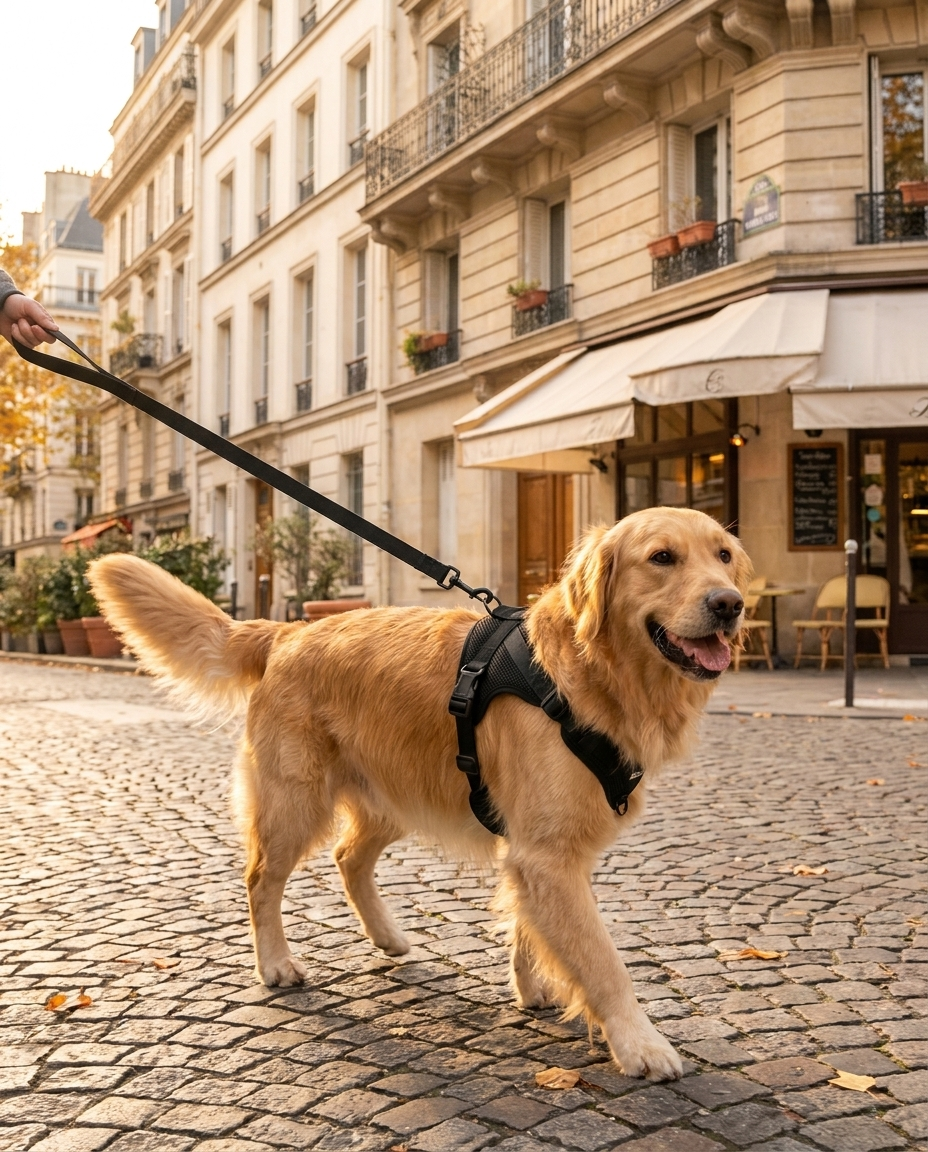
Does every walk turn into a tug-of-war? A dog that pulls is exhausting for you… and dangerous for them. Here is how to get back to pleasant, gentle walks.
Why your dog pulls
It is (almost) never disobedience. A dog pulls because they are excited by smells and the environment, because they naturally walk faster than us, and above all because pulling works: as soon as we follow them, they understand that pulling makes them move forward.
The danger of a standard collar
When a dog pulls with a collar, all the pressure is concentrated on their trachea and throat. Repeatedly, this can cause coughing, injury, and stress. This is why trainers today recommend using a harness.
The solution: the no-pull harness
A no-pull harness distributes pressure across the chest (never the neck) and, thanks to its well-designed attachment point, naturally redirects the dog toward you as soon as they pull — without hurting them.

Our no-pull harness with leash is adjustable at multiple points for a perfect fit, padded for comfort, and comes with a matching leash. All sizes are available, from small dogs to large breeds.
The 3 habits that change everything
- Stop as soon as they pull. Only start moving again when the leash goes slack. They will quickly understand that pulling = no more moving forward.
- Reward the correct position (by your side, leash loose) with a treat or a kind word.
- Be consistent: the whole family should apply the same rule, on every outing.
In summary
A dog that pulls is not a "dominant" dog: it is a dog that has not yet learned. With the right equipment — a harness that protects their throat — and a little consistency, your walks will become a shared pleasure once again.