Dog eating too fast: dangers and solutions to slow it down
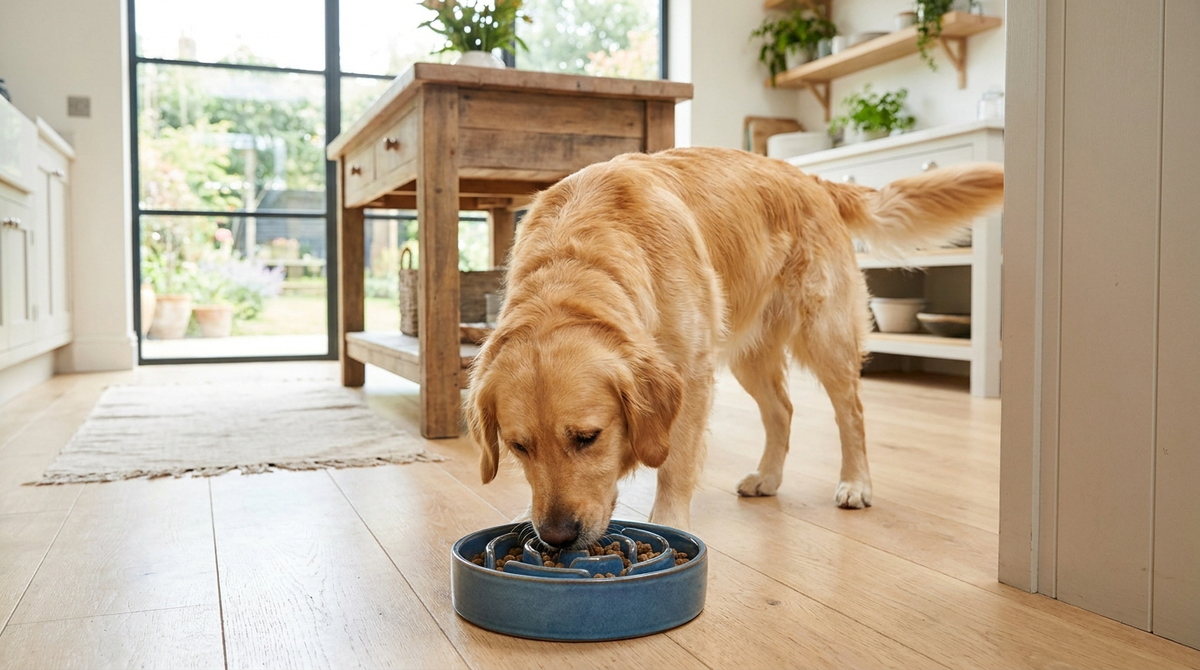
Does your dog inhale their food in 30 seconds flat? It’s not just a matter of greed—eating too quickly can be dangerous. Here is why, and how to gently fix it.
Why do some dogs eat so fast?
Instinct, for one: in the wild, eating quickly prevented others from stealing your meal. Often, there is also competition between pets in the home, boredom, or simply a standard bowl that poses no challenge.
The dangers of a meal swallowed too quickly
- Digestive issues: bloating, regurgitation, gas.
- Risk of stomach torsion (especially in large breeds) — a potentially life-threatening veterinary emergency.
- Weight gain: by eating quickly, the dog does not feel full and asks for more.
- Choking hazard from large kibbles that aren't chewed properly.
The simplest solution: the slow-feeder bowl
A slow-feeder bowl is designed with ridges or obstacles that force the dog to grab their kibble one by one. The result: they take 5 to 10 times longer to eat, chew better, and digest more comfortably.

Our ceramic slow-feeder bowl goes further than plastic models: ceramic is hygienic (it does not retain bacteria or odors) and the raised wooden stand improves posture — ideal for digestion and the back.
Our other tips
- Split meals into two or three portions throughout the day.
- Separate the bowls if you have multiple pets.
- Turn mealtime into a game from time to time (licking mat, treat-dispensing toy).
In summary
Slowing down your dog at mealtime helps them avoid digestive issues, limits the serious risk of stomach torsion, and helps them stay in shape. A small change in bowl, a big benefit for their health.